Forms and spreadsheets for independent landlords
Self-managing landlords need two systems: paperwork that holds up when a tenant disputes something, and books that make tax time a copy-paste. The paperwork side is the application, the lease, the move-in inspection, the notices and the deposit itemization. The books side is rent, expenses and Schedule E.
Below is both. The forms pack covers the tenancy from application to deposit refund; the spreadsheet tracks rent and expenses per property and totals them into Schedule E lines.
A tenancy has a fixed sequence, and each step produces the document the next one relies on: application and screening, lease, move-in inspection, rent ledger and notices during the term, move-out inspection, deposit itemization. Missing the move-in inspection is the most expensive gap, because without it a deposit deduction is your word against the tenant's.
Templates
Paperwork checklist: landlords
| Document | Why you need it | Template |
|---|---|---|
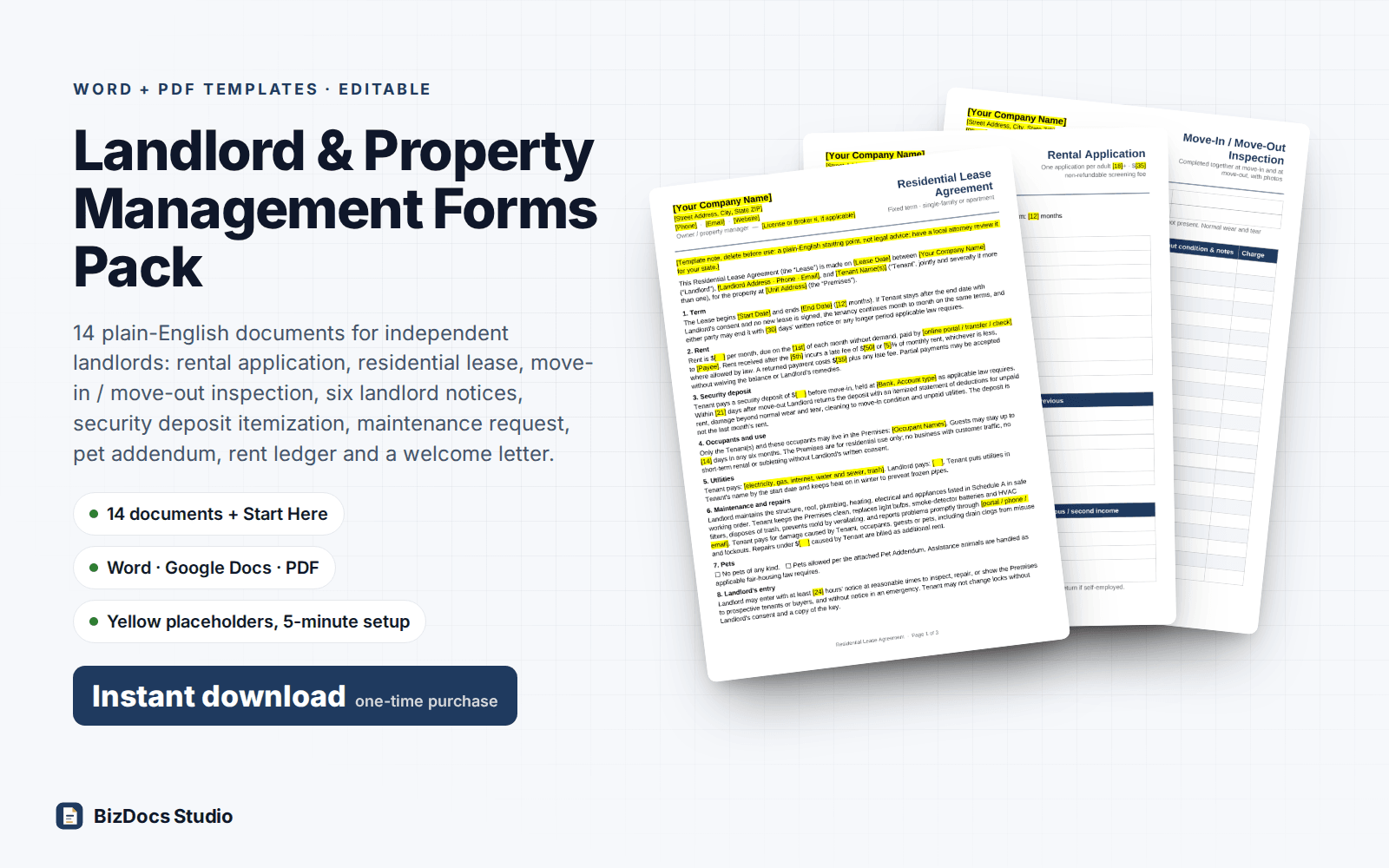
| Rental application | Consistent screening for every adult applicant, with authorization and fair-housing text. | Landlord Forms Pack · $13 |
| Residential lease agreement | Rent, deposit, maintenance split, entry, pets, default and move-out terms. | Landlord Forms Pack · $13 |
| Move-in / move-out inspection | The evidence behind every security deposit deduction. | Landlord Forms Pack · $13 |
| Landlord notices | Late rent, pay or quit, violation, entry, rent increase and non-renewal. | Landlord Forms Pack · $13 |
| Security deposit itemization | Itemized deductions within your state's deadline. | Landlord Forms Pack · $13 |
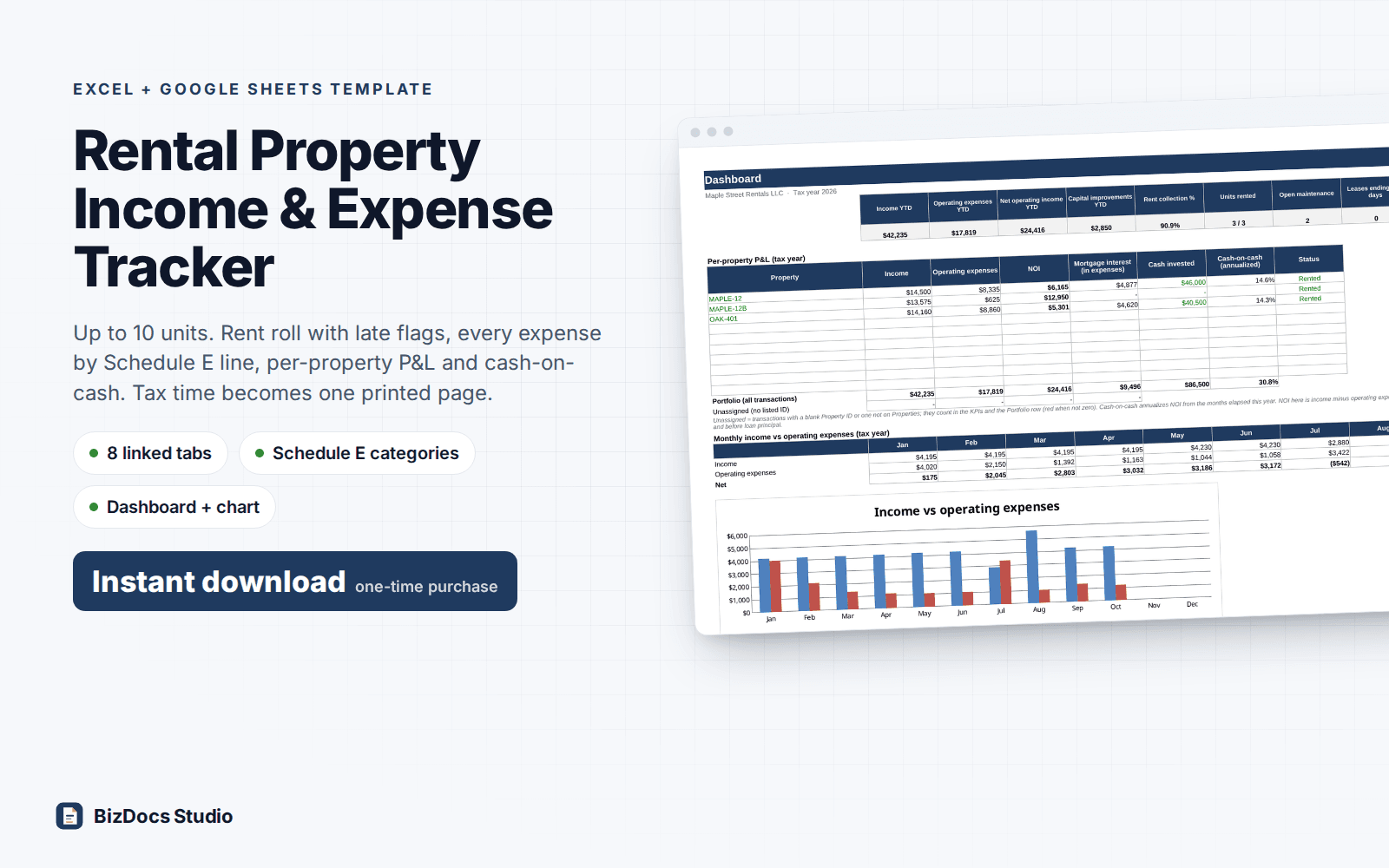
| Rent and expense records + Schedule E | Who paid, what it cost, and the totals your tax return needs. | Rental Tracker · $12 |
| Maintenance request and work log | Dated requests and responses are your record that repairs were handled within a reasonable time, and the log shows what each unit costs to keep up. | Landlord Forms Pack · $13 |
| Pet addendum | Pets approved by name, with the deposit or fee and the rules in writing, avoid arguments about damage and about animals that were never approved. | Landlord Forms Pack · $13 |
| Tenant rent ledger | A running record of charges and payments per tenant is what a late notice, a payment plan or a court filing is built on. | Landlord Forms Pack · $13 |
Guides
- What forms do I need as a landlord? A checklist from application to deposit refund
Every form a self-managing landlord needs, from application to deposit refund: screening, lease, disclosures, move-in inspection, notices and itemization.
- Rental application form: what to ask every applicant
What a rental application form should include: applicant, residence and income history, background questions, screening authorization and fair-housing wording.
- Move-in and move-out inspection checklist for landlords
How to do a move-in and move-out inspection that holds up: room-by-room checklist, condition codes, photos, normal wear vs damage and deposit deductions.
- Late rent notice and notice to pay rent or quit
When to send a late rent notice versus a notice to pay rent or quit, what each must include, delivery methods and sample wording for landlords.
- How to track rental income and expenses for Schedule E
How to track rental income and expenses in a spreadsheet: tabs to set up, categories that match Schedule E, rent roll, NOI and cash-on-cash return.
Questions
Are free state lease forms good enough?
Some states and bar associations publish free leases, and they are a fine starting point. The pack adds what a free lease usually lacks: the application, inspection, six notices, deposit itemization and a pet addendum, all in one matching set.
Do I still need a spreadsheet if I use rental software?
Not if the software does what you need. Landlords with up to about ten units often prefer a spreadsheet because there is no bank link, no subscription and the Schedule E totals are visible.
Are the notices valid in every state?
Notice periods and wording are set by state and city law, so they are placeholders. Check your state's statute before serving any notice. Not legal advice.
How long should a landlord keep records?
Keep tenancy documents for the whole tenancy and for the period your state allows for claims afterward. For taxes, the IRS says to keep records for as long as they matter for a return, generally three years after filing, and to keep records of a property's purchase and improvements until after you dispose of it.
How many units can the spreadsheet handle?
The tracker has rows for 10 properties or units and its transactions log holds 400 entries per file. Start a new file each tax year.